Inherited china is often put straight into normal use, which is exactly what it was made for and entirely the right instinct. The difficulty is that modern kitchens contain two appliances that will destroy it, and the damage is permanent, cumulative and largely invisible until it has already happened.
What does a dishwasher actually do to old china?
Three things at once. The detergent is strongly alkaline and mildly abrasive, the water temperature is far higher than hand washing, and the cycle is long. Together these attack anything sitting on top of the glaze rather than under it.
Gilding goes first, dulling and then wearing away entirely at the rim where it is thinnest. Overglaze enamels fade and lose definition. The damage accumulates over cycles, so a service may survive the first few washes and look noticeably tired after a dozen.
Why is overglaze decoration so vulnerable?
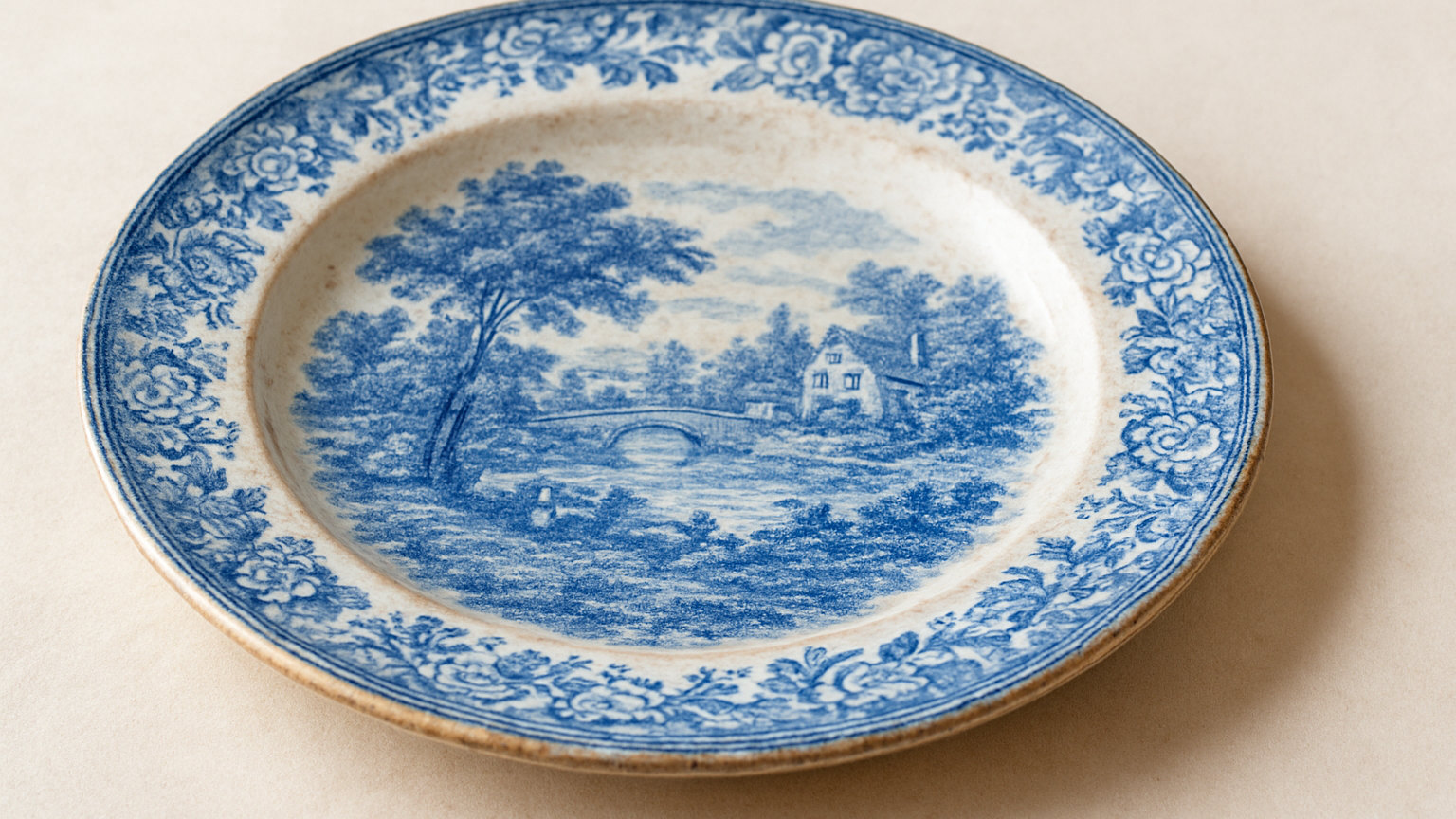
Because it sits on the surface rather than beneath it. Underglaze decoration, applied before the glaze and fired beneath it, is protected by a layer of hard glass and is far more durable.
Overglaze enamels and gilding are applied on top of the fired glaze and fixed at a lower temperature, so they remain the exposed surface. Run a fingertip over the decoration: if you can feel it standing slightly proud, it is overglaze and needs protecting. Smooth decoration beneath the glaze is much safer.
Can antique china go in a microwave?
No, particularly anything gilded or lustred. Metal decoration reflects microwave energy and will arc, producing sparks that burn the decoration off and can damage the appliance.
Even without visible metal, old ceramics with crazed glaze absorb moisture into the body, and heating that trapped moisture rapidly can crack a piece from within. Antique china should not go in an oven either, since thermal shock is what breaks old bodies most reliably.
How should it be washed?
By hand, in warm rather than hot water, with a small amount of mild detergent and a soft cloth or sponge. Wash one piece at a time rather than filling a bowl, since knocking two plates together is the commonest cause of chips.
Line the sink with a rubber mat or a folded towel to soften any drop. Avoid abrasive scourers entirely, dry immediately with a soft cloth rather than leaving pieces to drain, and never soak gilded or repaired items, since water reaches restoration adhesives and softens them.
What about stains and crazing?
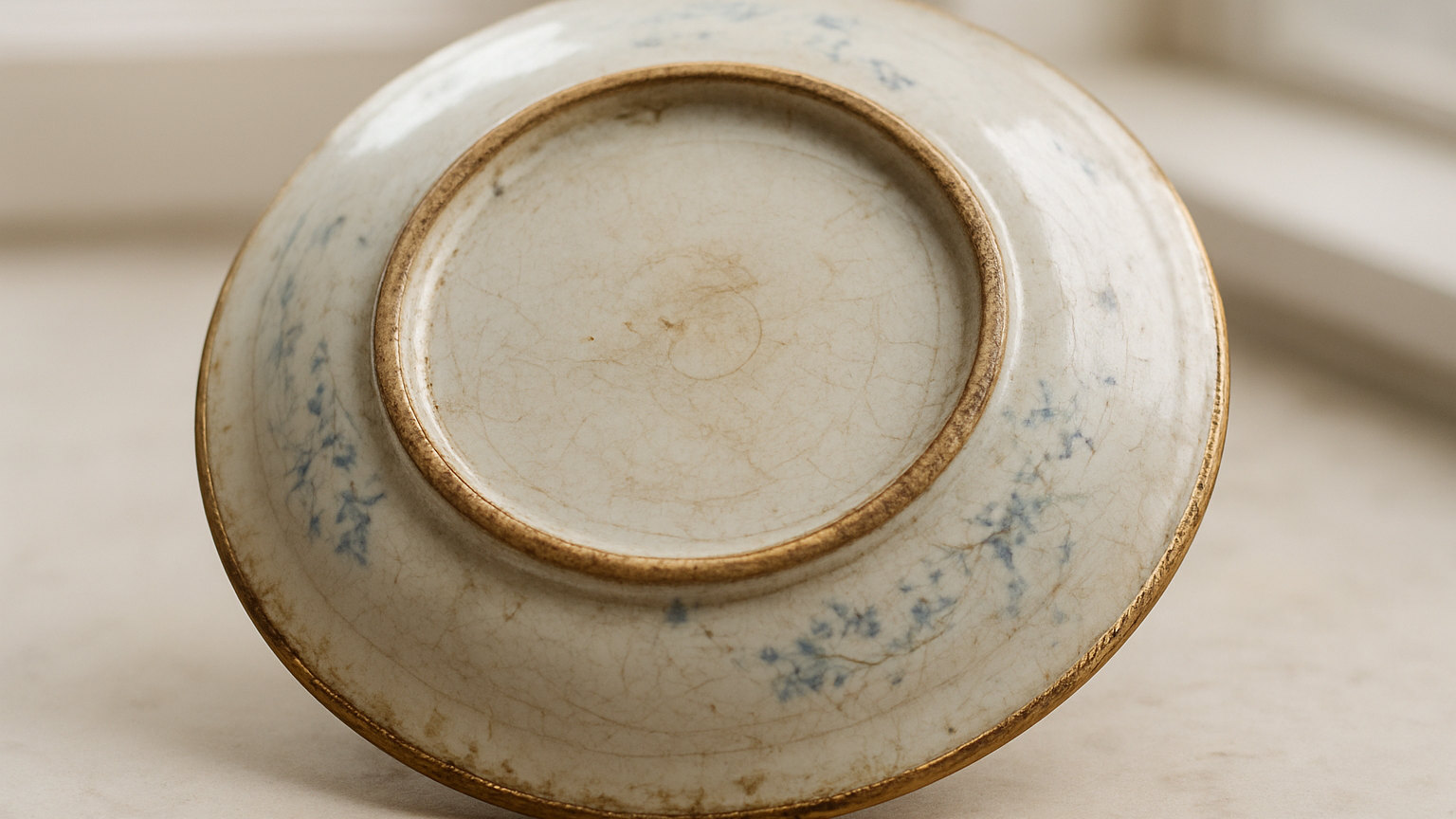
Crazing is the fine network of cracks in the glaze that develops with age, and it is normal rather than damage. The problem is that those cracks let liquid into the porous body beneath, where tea, coffee and food produce brown staining that will not wash out.
Do not attempt to bleach it out. Household bleach and hydrogen peroxide soak into the body, are extremely difficult to remove, and continue to affect the piece afterwards, sometimes causing salts to migrate to the surface. Crazed pieces are best kept for display or dry use rather than for liquids.
How should china be stored?
Plates flat rather than upright, with a soft interleaf of felt, paper or kitchen towel between each one, since stacking bare plates grinds the footrim of one against the glaze of the next.
Hang cups on hooks or stand them separately rather than stacking them inside each other, which chips rims and can jam them together. Store lidded pieces with the lid alongside rather than on top, and never store china in a loft or garage where temperature swings and damp will do the rest.
Should antique china be used at all?
Yes, for most of it. Ordinary transferware and bone china services were made in quantity, are worth relatively little, and are far more enjoyable used than boxed. Careful hand washing lets a service last generations more.
Reserve display for anything gilded and valuable, anything restored, anything crazed and stained, and any piece with lead glaze that predates modern food safety standards. If you are unsure whether a glaze is safe for food, use it for dry items or display rather than for anything acidic or hot.