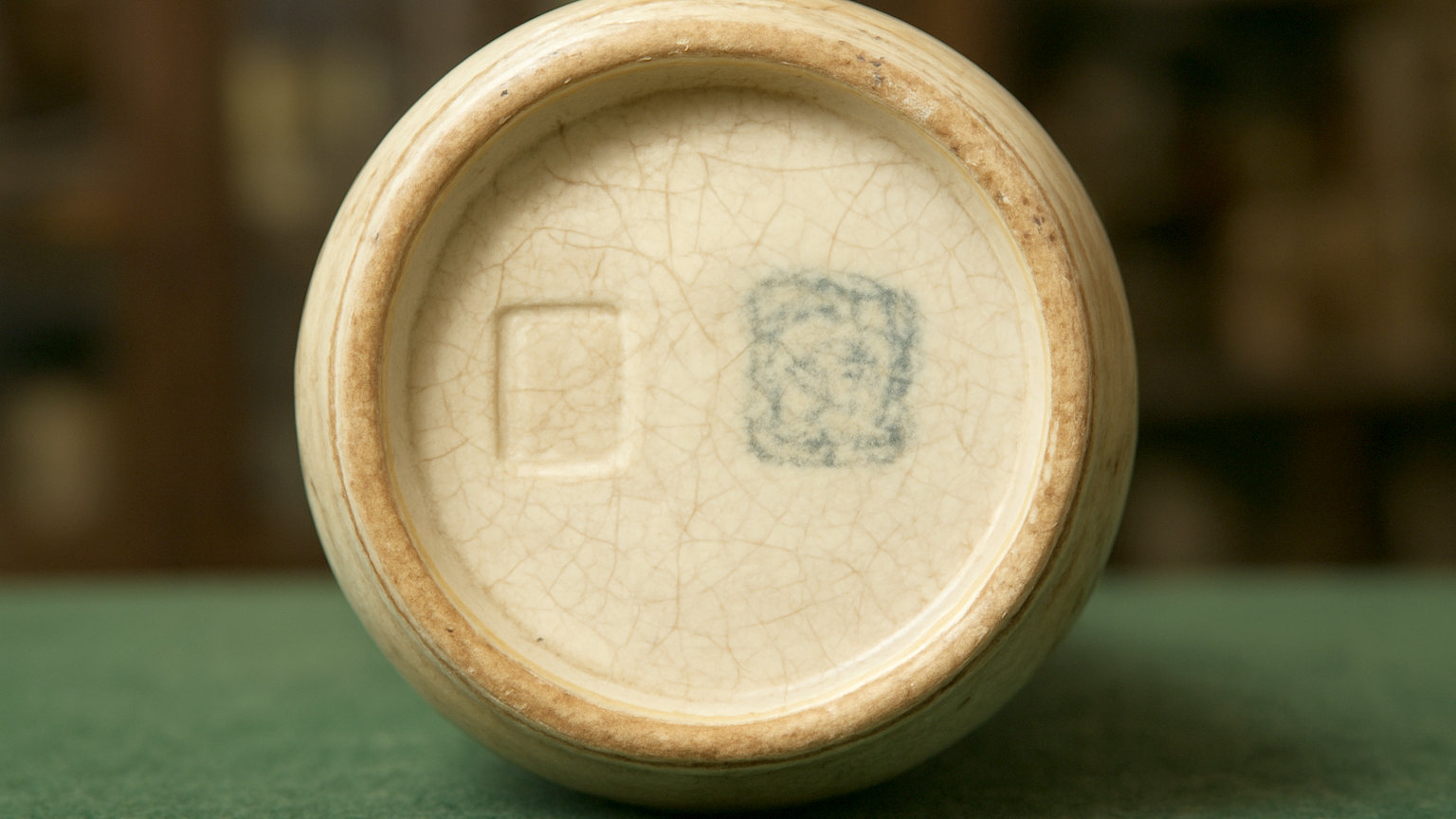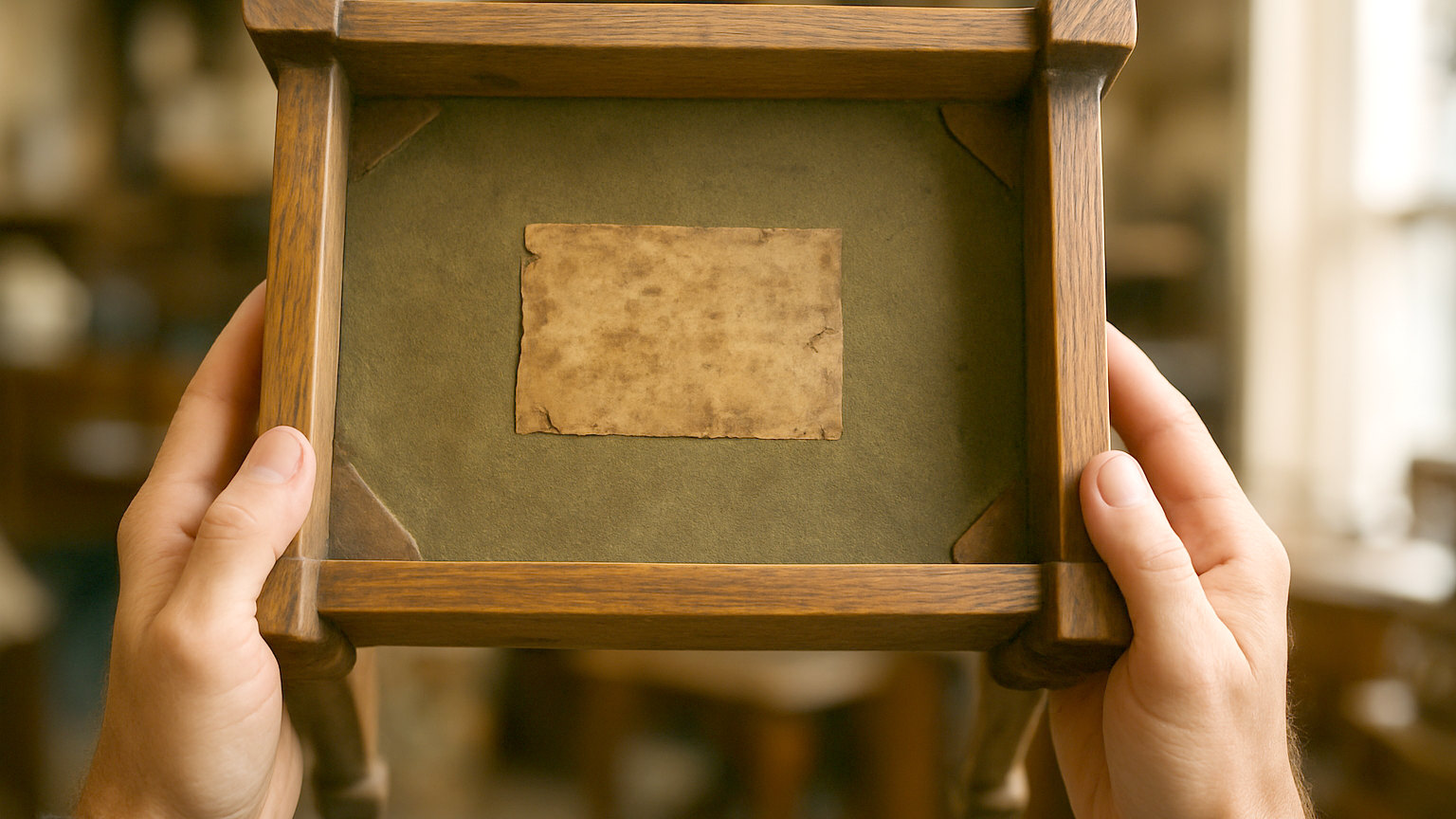
Furniture is the least marked of all antique categories, which makes the exceptions valuable. A stamped name or a surviving paper label can multiply what a piece is worth, and both survive more often than people assume because makers put them where nobody would ever wipe a cloth.
Where should you look for a label?
In the sheltered positions. The back of a carcass, the inside face of a drawer back, the underside of a drawer bottom, the inside of a plinth and the underside of a seat rail on chairs.
On case furniture check inside the top, above the uppermost drawer, which is a common position and one nobody thinks to look at. On tables and desks look underneath the top and inside any fitted interior. Take a torch and be systematic rather than glancing.
What do the labels look like?
Printed paper, frequently with an engraved border, giving the maker name, a full street address, a description of the trade and sometimes a royal appointment or an exhibition award.
They are often tattered, discoloured and partly missing, which does not reduce their usefulness. Even a fragment carrying part of an address can be traced. Some are printed on the maker own stationery and some are trade cards pasted in, and both count.
What about stamped names?
Struck into the timber with a punch, usually on the top edge of a drawer side, on the seat rail of a chair, or on the underside of a top. They are shallow and easily missed.
Use raking light held at a low angle rather than looking straight on, since a struck mark is a depression that needs shadow to read. Some workshops stamped every piece and others only occasionally, so an absent stamp proves nothing about a maker who is known to have used one.
What are the numbers you find?
Frequently workshop or inventory numbers rather than maker identification. Chairs from a set often carry matching numbers stamped or scratched on the seat rail, which should run in sequence and are excellent evidence that a set is genuinely original.
Larger houses numbered their contents for inventory purposes, and those numbers occasionally allow a piece to be traced to a specific household through surviving inventories. Record every number you find, including where on the piece it appears.
Why must you never clean a label?
Because paper glued to timber for two centuries is extremely fragile, and water, solvent or even a dry cloth will take it off. A tattered original label is worth considerably more than a clean surface.
Do not attempt to lift a corner, do not try to flatten a curled edge, and do not apply anything to make faded printing more legible. Photograph it in place under raking light instead. Losing a label during cleaning or restoration is one of the more expensive accidents in furniture.
How do you research what you find?
Through trade directories, which listed businesses by name, trade and address and were published regularly. A name plus an address gives you a run of years during which that firm traded there.
Where the address changes between directory editions, you have a narrower bracket for anything carrying the earlier one. Local studies libraries and county record offices hold the fullest runs. Note that a label may name a retailer rather than the maker, so establish which trade the description indicates.
How much does a label add?
Substantially, and disproportionately to its size. A labelled piece by a documented maker can be worth several times an identical unlabelled example, because the attribution is certain rather than inferred.
Protect it accordingly. Tell any restorer explicitly that a label is present and must be preserved, photograph the whole area before work begins, and keep those photographs with the piece. If a label is lifting, a paper conservator can consolidate it in place rather than removing it.
What if the label names a retailer?
It still helps, because a retailer commissioned the piece and stood behind it, and the shop name may itself carry a premium with collectors. What it does not do is tell you who made the object.
Look at the trade description in the label wording, since it usually says plainly whether the business was a cabinetmaker, an upholsterer or a furnishing warehouse. Research the name in directories either way, because the address still dates the piece.